5 frequently forgotten trailer washing steps
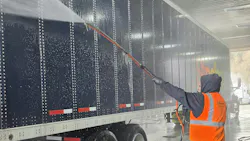
Washing trailers on a consistent basis helps protect paint, prevent corrosion, and preserve both trailer life and a fleet’s brand image.
However, careless cleaning can actually do more harm than good in some cases. Paint and decals can become stripped, metals can become spotted and scratched, and improper washing can lead to maintenance issues down the road.
According to Kurt Gustafson, general manager of Cox Fleet, fleets can avoid many common trailer maintenance problems by taking a few precautionary steps during the washing process.
Tip #1: Don’t neglect the undercarriage
A lot of dirt and debris can build up underneath a trailer. During the winter months, road salts can lead to significant corrosion on axles, wheel ends, upper couplers, crossmembers, landing gear, and other components.
“Unless you wash that salt off, it’s just going to stick there and eat away at the steel underneath a dry van,” Gustafson said. “Taking this simple step could literally add years to the life of a dry van.”
Tip #2: Be on the lookout for wall tears
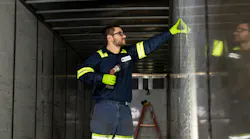
Fleets hauling food in reefers need to wash trailer interiors regularly. Before spraying down the inside with a pressure washer, Gustafson recommends inspecting the walls for tears or damage.
Wall tears can allow water to become trapped inside the insulation and foam, leading to deteriorated cooling performance, mold, and potential health or safety concerns.
“Any wall tears should be properly repaired and sealed before spraying a bunch of water and chemicals on them,” Gustafson said.
Tip #3: Inspect electrical connections
Moisture can travel along cables and eventually work its way into electrical connections, causing corrosion over time.
“Part of a routine trailer PM should include opening those connections to inspect them and add some dielectric grease,” Gustafson said. “A fleet should confirm that these PMs have been getting done prior to washing a trailer.”
Tip #4: Keep an eye on couplers and subframe channels
The upper coupler and rear subframe channels are areas where water can become trapped after washing.
“If a technician is spraying in there and leaves all that water sitting in those channels, that can cause issues if the trailer doesn’t move for a while,” Gustafson said. “If you can cover those holes so water doesn’t get in there, great. Or maybe there’s a way to vacuum the water out when you’re done. Whatever you do, that little extra effort is well worth it.”
Tip #5: Watch the wheel ends
Wheel ends are another area where trapped water can cause costly damage.
“Take the time to make sure those hubcap plugs are covered,” Gustafson said. “If you get water inside a hub, it’s going to cause wheel end damage. Many technicians don’t even think about that because they assume a hubcap is sealed. But hubcaps have what amounts to a tiny pressure-release valve in the center. If you hit those head on with a pressure washer, water will get inside that hub.”
Taking the time to properly clean trailers is an important part of maximizing trailer life. But careless washing can create expensive maintenance problems if fleets overlook key areas during the process.

About the Author

Gregg Wartgow
Gregg Wartgow is a freelancer who Fleet Maintenance has relied upon for many years, writing about virtually any trucking topic. He lives in Brodhead, Wisconsin.