Generational change: Organizing parts by engine generation can cut M&R costs
Key Highlights
- Engine-generation differences can create parts mismatches, downtime, and added costs for mixed fleets.
- Organizing parts and PM schedules by engine generation can help reduce maintenance errors and downtime.
- Generation-specific technician assignments can improve repair accuracy and build useful failure-pattern knowledge.
Work truck fleets do not only deal with different makes and models. They deal with generation-to-generation engine changes inside the same nameplate, and those changes create parts inventory and uptime problems that a lot of shops do not see coming until a truck is already up on the lift.
A pickup owner who handles most of his own repair work might find a generation-specific design flaw annoying at worst. A cracked oil cooler or a failing turbo means the truck spends the weekend at the dealership instead of pulling the boat to the lake. That is a personal inconvenience with a clear ceiling on how much it costs.
For a fleet manager running 20 medium-duty pickups, the same kind of failure has no ceiling. If three of those trucks go down at once for a problem tied to the same engine generation, the fleet is not looking at one repair bill. It is looking at three trucks sitting idle while the maintenance team works out which parts actually match which build.
And those costs grow exponentially when the issue appears in transit. FleetNet America and the American Trucking Associations' Technology & Maintenance Council found that roadside repairs can cost about four times as much as the same repair done in the shop. The Benchmarking study also found unplanned downtime can cost up to $760 per day before towing and repair costs. That means if an engine-generation defect takes out three of your trucks, you are out upwards of $2,280 a day in lost revenue and productivity before a single part gets ordered.
Now let's consider if you have three similar repairs and only two critical repair parts in stock. According to OxMaint, emergency-shipped parts cost three to five times more than standard, driving up the cost.
But there is a way to cut that downtime.
Start with the parts catalog
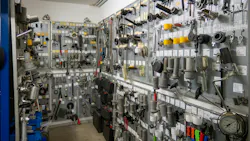
Organize the parts catalog by engine generation rather than just make and model. That single change makes it easier for a maintenance team to source the correct component the first time, instead of cross-referencing part numbers across model years that share a badge and little else under the hood.
The cost of skipping that step shows up fast. Fleet parts management research puts the downtime cost of an incorrect or delayed part at $500 to $2,000 per incident, on top of the labor spent pulling the wrong part back off and starting the diagnosis over. A catalog organized only by make and model hides that risk, because two trucks with the same name on the tailgate can carry a completely different fuel system, turbocharger, and emissions setup depending on the year they left the factory.
For fleets evaluating diagnostic and calibration tools across mixed diesel platforms, matching the right diagnostic setup to the specific engine generation rather than a one-size-fits-all approach is where most of the long-term cost savings actually come from. Structured preventive maintenance built around those generation-specific failure points can cut unplanned downtime by close to a third and return $4 to $8 in avoided repair and towing costs for every dollar spent, according to CTR Repair Team.
As maintenance and fuel costs continue to climb, preventing unforced errors, like being out of stock on parts you know you'll need, will be crucial. And that starts by reorganizing your thinking around parts management and PM schedules.
What actually changes from generation to generation
On the Ford side, the pattern is well documented across three generations of Power Stroke diesel.
- The 6.0L (2003 to 2007) is known for head gasket failures, traced to torque-to-yield head bolts that were not built to hold up under sustained high load.
- The 6.4L (2008 to 2010) moved the failure point to the fuel system and compound turbocharger, with CP4 pump failures and turbo service among the most expensive repairs in the diesel aftermarket.
- The 6.7L (2011 to present) improved generation over generation on turbo and EGR reliability, but a newer generation is not automatically a clean one. Ford issued a recall in December 2024 covering 295,449 Super Duty trucks from the 2020 through 2022 model years over Bosch high-pressure fuel pump failures caused by aged biodiesel deposits.
The same generation driven pattern shows up on other platforms a mixed fleet is likely running.
- Cummins moved from VP44 fuel system and lift pump issues on the 5.9L to grid heater and head gasket concerns tied to higher cylinder pressure on the 6.7L.
- Duramax carries a similar story generation to generation, from LB7 injector failures to LLY overheating under load to LML fuel system contamination tied to its own high pressure pump.
In each case, the failure point moved with the generation, not the name on the truck.
Turning that into a shop playbook
Generation data only helps if it changes how the shop runs day to day, not just what is written on a reference sheet nobody opens.
- Organize by generation code: Organize the parts room by generation code, not only by make and model. A bin labeled Ford 6.7L Power Stroke invites the wrong high-pressure fuel pump to get pulled for a truck built two years before the part in the bin was designed for. A bin labeled 6.7L Power Stroke, 2020 to 2022, RP7 pump, does not.
- Build targeted PM schedules: Build the PM schedule around the failure point each generation is actually known for, instead of one generic mileage interval for the whole fleet. A shop running 6.0L trucks should inspect the oil cooler and water pump on a shorter interval than the factory sticker suggests. A shop running 6.4L trucks should schedule closer fuel system checks rather than waiting for a CP4 failure to force an unplanned week off the road. A shop running 2020 to 2022 6.7L trucks should confirm the PCM software update tied to the fuel pump recall has actually been completed, rather than assuming it has.
- Assign dedicated technicians: Where the schedule allows it, assign technicians to one engine generation at a time. A tech working a 6.0L in the morning and a 6.7L in the afternoon is more likely to grab a torque spec, a part, or a diagnostic step that belonged to the wrong generation. Grouping repair orders by generation, even for a single shift, cuts that risk and lets a technician build real pattern recognition on the specific failure points of that platform, instead of splitting attention across three engines that share a name and little else.
None of this requires slowing down a fleet's replacement or upgrade cycle. It requires treating the engine generation, not the make and model painted on the door, as the actual unit the parts room and the PM schedule are built around.
For fleets sourcing diagnostic and calibration tools that need to match specific platforms and generations instead of one generic listing, the platform specialists at EngineGo work with Power Stroke, Cummins, and Duramax shops to match the right tools to the platforms and generations they actually service.
About the Author
Derek Miller
Derek Miller is a Colorado-based automotive technician and columnist for EngineGo.com, bringing over 12 years of hands-on experience to major diesel performance upgrades and practical troubleshooting.