How AI changes shops' online visibility and ability to connect with fleets

CHANDLER, Arizona—Artificial intelligence is reshaping how fleets and professional drivers search for repair shops online, creating new marketing challenges for independent service providers that have traditionally relied on search engine optimization and online reviews to attract customers.
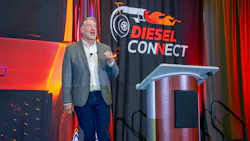
During a session at this year’s Fullbay Diesel Connect conference, John Clarke, account executive, strategic partnership acquisition at Dieselmatic, said the rise of AI-generated search results is changing how businesses appear online. “People are no longer searching the same way they were two years ago,” Clarke said. “AI is interpreting intent and generating recommendations.”
Instead of simply displaying a list of websites, AI-powered search tools increasingly summarize information directly inside search results and include those on the top of search pages. “We’re moving from search engines to answer engines,” Clarke said.
Large language models and AI-powered search platforms are beginning to pull information from online reviews, websites, social media posts, and business listings to generate summaries about companies. As a result, shops with limited online content or inconsistent customer reviews may become less visible in search results over time.
“The machine is trying to decide whether you are trustworthy,” Clarke said, adding that the shift could significantly impact how repair shops are discovered and how fleets make maintenance decisions.
Historically, many businesses focused heavily on traditional search engine optimization strategies such as keyword placement and website rankings. However, Clarke said AI-generated search summaries place greater emphasis on reputation, consistency, and authority across multiple digital platforms.
“The old SEO game is changing,” Clarke said. “Now it’s about whether AI systems understand who you are and what you do.”
For repair shops, that means customer reviews may become even more important. Clarke encouraged shop owners to actively request customer feedback and respond to online reviews consistently. He also advised businesses to create original content that reflects real shop expertise instead of relying heavily on generic AI-generated marketing materials. “Authenticity matters more now, not less,” Clarke said.
AI-generated content that lacks technical depth or originality may ultimately hurt online visibility because search systems are increasingly evaluating expertise and credibility. “If everybody says the same thing, nobody stands out,” Clarke said.
Repair shops should also pay closer attention to how their businesses appear across multiple digital platforms, including Google Business profiles, social media accounts, and directory listings. Inconsistent contact information, outdated websites, or incomplete business descriptions can negatively impact how AI systems interpret a company’s credibility. “You have to train the internet who you are,” Clarke said.
At Diesel Connect, Fullbay demoed a new support assistant called Ask Spike, which allows users to get help navigating the shop platform to gain data insights and speed up repairs. Other telematics and shop software providers such as Motive (AI Answers), Fleetio (AI Service Advisor), and Collective Data (Ask Anything) have rolled out similar LLM assistants in the past year.

Strengthening your online presence
Ashley Sowell, CEO and co-founder of Integrity Fleet Services, said shops sometimes deprioritize social media during busy periods, even though it remains an important part of how customers and potential employees evaluate a business online. Sowell noted that she planned to focus on social media after returning home from the conference. “We put it on the back burner, but it is so important,” she said while speaking during an operator roundtable.
For tips on using social media in the shop to attract techs, read our story, “Hiring best techs now requires social media, video savvy.”
While AI search tools are evolving rapidly, Clarke said many repair shops still have opportunities to strengthen their digital presence by focusing on customer experience, clear communication and educational content. He encouraged shops to create content that answers common fleet questions about maintenance, diagnostics and repairs rather than focusing exclusively on promotional messaging.
“The shops that teach are going to win,” Clarke said, noting that AI-generated search tools may increase the importance of niche expertise.
Shops that consistently publish content related to specific equipment types, repair specialties or service capabilities could become more visible for targeted fleet searches, but Clarke warned that repair shops should avoid becoming overly dependent on fully automated marketing strategies. “AI can help you scale, but it can’t replace trust,” he said.
In addition to using an online presence to attract customers, shops can use it to attract technicians, according to Peter Cooper, founder of Ascend Consulting.
“You really need to start thinking about two funnels in your business,” Cooper said. “One is a customer funnel. The other is a labor funnel, and you need to start worrying about the labor funnel.”
Cooper encouraged shops to consistently share content that reflects company culture, employee development and day-to-day shop operations.
“People do not know who you are,” Cooper said. “They’re going on Google, they’re looking at your reviews, they’re looking at your social media, they’re looking at your website.”
Sowell said sharing information on social media from employee appreciation lunches, training events, workplace activities or technician recognition can help show employees what it is like to work at the shop.