Indie shops and the battle for growth
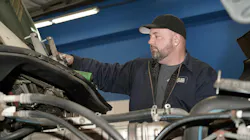
Independence offers repair shops the freedom to hire, train, and make decisions as they see fit without requiring layers of corporate approval. But liberty alone doesn't pay the bills.
Just as America in its early days had to turn its attention from revolution to expansion at some point, independent repair shops must confront a more practical challenge: winning and retaining customers in a competitive market.
The advantage of flexibility only matters if there are vehicles in the bays. And as customer expectations shift and fleets require more high-level support, many independent shops are finding that surviving, and growing, requires adapting their approach to business development, customer relationships, and long-term strategy.
The customer front
Attributes like flexibility only matter if a shop has customers. Due to recent changes in the market, some shop owners have adapted their approach to sales and marketing.
“Customers have less money to spend than in years past,” said Austin White, co-owner of Iron Buffalo Truck & Trailer Repair. “We need a bigger market share to continue growing like we want.”
To that end, White and his business partner, Mike Schwarz, have become more focused on business development. They’ve joined some local chambers of commerce and have gotten involved in the Colorado Motor Carriers Association. They’ve also hired a sales director and three outside salespeople. “They’re out selling services and building relationships every day,” White said.
Over in Ohio, brothers Luke Todd and Zeb have observed a change in market complexion.
“We’re not seeing as many owner/operators as we did years ago,” said Luke Todd. “A larger share of our customers are businesses that have smaller fleets, like a furniture company with some delivery trucks.”
According to Todd, what may have been a benefit in the eyes of a truckload owner/operator may not be as important with these small business fleets.
“Owner/operators are in their vehicles every mile they are driven,” Todd said. “They know when there’s a little rattle somewhere and what maintenance is needed. That’s not always the case with small business fleets. Some don’t even know that something like an air dryer cartridge must be replaced on a certain schedule.”
That means The Service Company can’t just wait for customers to come to them. Todd said his company is now functioning almost like an internal maintenance department for a small business. They’re tracking and predicting maintenance needs, and they’ve added a couple of account managers to help do it.
“It takes that level of interaction to make sure we are staying on top of all the things that need to be done if the customer is literally trusting us to keep their fleet moving,” Todd said.
Up in Michigan, Kerry Brothers Truck Repair has also been adapting its approach to servicing small business fleets.
“We want to make it as convenient and cost-effective as possible to have us manage all of their maintenance,” said Bill Kerry, president of Kerry Brothers with five locations in the Detroit area. “We don’t even bother with estimates for these types of customers anymore. We go through everything front to back. Then we’ll tell the customer what’s going on and determine if it’s worth spending the money to get that truck fixed.”
By positioning itself as more of a fleet manager than simply a repair shop, Kerry said it’s easier to build trust and loyalty — even if it could jeopardize some immediate revenue.
“We talk to customers about their growth plans for their businesses,” Kerry said. “If they plan on exiting their business in a year or two, maybe we’ll just put perfume on a pig. But if they plan to continue operating their business, we’ll explain how it’s not a great idea to keep running that old vehicle. We try to take a holistic approach to helping fleet customers best manage their costs and uptime.”
Manifesting destiny
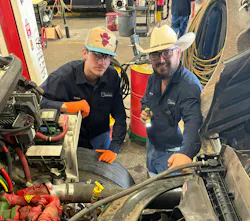
Kerry Brothers, The Service Company, and Iron Buffalo are all in expansion mode, which some believe is necessary to the future survival of independent repair shops. New England Fleet Services isn’t quite there yet, although expansion is something Taylor has his eye on as his single-location company continues to add customers and grow revenue.
Preserving cash flow as the business grows is now imperative, so Taylor has begun using a third-party billing company for the routine maintenance work he does for larger fleets. The billing company buys Taylor’s receivables for a 3% cut and then collects payment from Taylor’s customers.
“To us, it’s a great investment, no different than a credit card fee,” Taylor said. “Getting paid the next day improves our cash flow, and that alone makes it all worth it. When we presented this idea to our larger fleet customers, they were all on board because they were paying net 30 anyway. We just made it clear that if they ever saw any billing discrepancies or had any questions, they could still get a hold of us directly.”
When using a billing company, an independent shop needs to be careful about eroding its biggest advantage, which is being a more personable company. To that end, Taylor said he’ll still bill his smaller, more relationship-driven accounts directly. He reiterated that this kind of flexibility is another advantage of being independent.
When times are tough and challenges too great, even independent spirits must band together by way of a larger private equity company with free capital. The owners can retain a percentage of ownership and oversee the operation, while the loose confederation gains economy-of-scale advantages for healthcare, software, parts, and other investments a small business cannot normally access. It’s a growing trend that leaves owners a big choice: surrender to a more centralized model or retain their sovereignty.
“It’s no secret that venture capital companies are buying out smaller companies all over the place,” Taylor said. “Being an optimist, I believe the little guys who are doing it right really have a chance to shine. Selling a successful business is always a good option for an exit strategy. But I’m 43 with a wife and young kids, and our business still has a lot of runway in front of it.”
Taylor and those like him will undoubtedly face tumultuous times in their attempt to manifest the American dream, but entrepreneurship, especially in the fleet maintenance sector, was never meant for the meek and quiet.
About the Author
 Gregg Wartgow
Gregg Wartgow
Gregg Wartgow is a freelancer who Fleet Maintenance has relied upon for many years, writing about virtually any trucking topic. He lives in Brodhead, Wisconsin.