Waiting for EPA's final NOx rules may cost you
Key Highlights
- The EPA's 2027 NOx standards are expected to increase diesel truck costs by $8,000 to $15,000 per unit, significantly impacting fleet budgets.
- Little time remains in 2026 for strategic procurement; delays could result in higher prices and reduced availability as market competition intensifies.
- Regional and state-specific engine certifications add complexity, requiring fleets to verify compliance before placing orders to avoid operational issues.
- Private fleets are already securing build slots early to mitigate cost increases, leaving less proactive operators at risk of being priced out.
- A proactive, well-planned approach in 2026 is essential to navigate supply constraints, regulatory changes, and technical complexities in heavy-duty truck procurement.

For the past year, a sense of regulatory uncertainty permeated the heavy-duty transportation industry. As stakeholders watched the shifting political and legal landscape—including the repeal of the Chevron doctrine and the subsequent re-evaluation of environmental standards—many organizations with transportation fleets adopted a cautious approach. The assumption was that the urgency surrounding the 2027 nitrogen oxide (NOx) standards might dissipate under regulatory review.
However, that illusion of a reprieve has vanished. The U.S. Environmental Protection Agency (EPA) has confirmed it is holding firm on the 2027 timeline and the stringent 35 mg (per horsepower-hour) NOx standard. With the pre-buy conversation officially back in place, the window for strategic procurement is closing. For organizations managing heavy-duty truck fleets, delaying equipment decisions until the EPA releases its adjustment proposal in 2026 is not just a cautious move—it is a high-risk financial gamble.
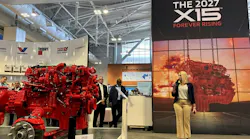
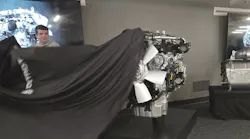
2027 Class 8 financial reality: $15,000 price tag of delay
The transition to model year 2028 equipment, which must meet the new standards starting January 1, 2027, represents one of the most significant cost escalations in recent industry history.
Forecasts indicate that once the required technology, including advanced emissions components and updated warranty requirements, becomes standard, the cost per Class 8 tractor will increase by approximately $8,000 to $15,000.
This is not just a projection of inflationary pressure; it is a fundamental shift in total cost of ownership (TCO). As an example, for a private fleet replacing 100 power units, a delayed approach could result in up to $1.5 million in unforced capital expenditure. Current market data suggests that while the economy is improving from a business balance-sheet perspective, such a sharp spike in equipment costs can rapidly erode margins.
Time constraint: Understanding 2026’s fleet procurement bottleneck
The danger for fleet executives lies in the timeline of regulatory clarity versus the reality of original equipment manufacturer (OEM) production cycles. The EPA’s adjustment proposal is not expected until this spring, leaving the industry with less than nine months before the new standards take effect.
History and current market indicators suggest that once 2027 pricing is officially released, the industry will return to a strict allocation environment. We are already seeing the beginning of this trend:
- Capacity absorption: While Class 8 tractor sales are forecast to be around 140,000 units in 2026, the industry is already seeing fleets pulling orders forward to avoid the 2027 gamble.
- Selling out: Reports indicate that build slots for Q3 and Q4 of 2026 are already being secured.
- Backlog risk: Crucially, there is often no price protection for orders in backlog. If a truck's build date slips into 2027, it may be updated to the 2027 certification year—and the accompanying price tag—regardless of when the order was placed.
OEM complexity: Beyond the sticker price
The move toward 2027 is not just about cost; it is about increasing technical complexity. Fleet managers must navigate a fragmented landscape of engine certifications and regional requirements:
- Regional restrictions: Certain Cummins engines may not be compliant in California Air Resources Board (CARB) states. Organizations must confirm a vehicle's final registration destination before placing an order to ensure operational viability.
- State-level variations: Paccar MX engines for 2026 will be 50-state certified with updated warranties, but differences between CARB and EPA certifications across other brands may lead to significant variations in both availability and secondary market value.
This complexity reinforces why 2026 is the last comfortable landing zone. Waiting until the final months of the year limits the organization’s ability to strategically select engine and chassis configurations that best fit its specific duty cycles.
Why private fleets are leading the charge
Market data show that private fleets are already taking steps to maximize utilization and reduce fleet age before the regulatory deadline. These organizations typically budget on multi-year cycles and are acutely sensitive to the impact of a $15,000-per-unit increase on the bottom line.
For-hire carriers are also beginning to rebound from profit lows, and as capacity tightens, they will increasingly compete for the remaining 2026 build slots. As for-hire fleets begin to procure more aggressively, the availability for smaller or less proactive operators will evaporate.
Planning for stability in an unstable landscape
The regulatory landscape remains the greatest concern for companies with heavy-duty truck fleets. While the broader economy supports trend-like growth, the double-edged sword of equipment forecasting means that those who do not act early may find themselves priced out or locked out of the market.
Successful asset management in 2026 requires moving past a wait-and-see mindset. By mapping out replacement cycles now, securing build slots before they vanish, and double-checking regional registration requirements, fleets can protect their budgets from a sharp, predictable, and entirely avoidable price increase. The clarity the industry was waiting for has arrived: The time to lock in 2026 equipment is now.
Strategic roadmap
To mitigate risk, organizations with transportation fleets must align their procurement strategy with an increasingly narrow window of opportunity. The landscape of opportunity is currently shifting in the first half of 2026 as supply begins to tighten and larger fleets aggressively lock in remaining build slots to avoid regulatory exposure.
By the third and fourth quarters of 2026, the market will enter a last-call phase; the release of the EPA's adjustment proposal is expected to trigger a surge in demand, leaving only limited availability at current cost levels. Once 2027 arrives, the industry faces a new reality where the 35mg NOx standard becomes mandatory, and equipment prices are projected to increase by $8,000 to $15,000 per unit.
About the Author

Brian Antonellis
CTP, Senior Vice President, Fleet Operations
Brian Antonellis, CTP, is the senior vice president of Fleet Operations at Fleet Advantage, a leading innovator in truck fleet business analytics, equipment financing and life cycle cost management.