How to identify common automated transmission clutch problems
Key Highlights
- Driver feedback and fault codes help technicians diagnose AMT clutch problems faster.
- Check sensors, wiring, software, and actuators—not just the clutch—when diagnosing AMT faults.
- Software updates and clutch recalibration help restore proper AMT shifting after repairs.
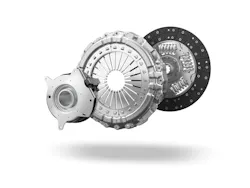
Automated manual transmission (AMT) clutches can provide long service life, but that doesn't mean they are immune to wear or failure. Heavy loads, stop-and-go driving, low-speed maneuvering, heat, contamination, and issues with the electrical or pneumatic systems that control clutch actuation can all affect performance. Because modern AMTs rely heavily on sensors, software, and electronic controls, technicians also need to look beyond the clutch itself when diagnosing a problem.
Recognizing the early signs of clutch wear or malfunction can help fleets avoid more serious failures. Here's a look at some of the common problems technicians may encounter and how to diagnose them.
Top two driver complaints
Along with fault codes, driver feedback can be a technician’s best source for learning there could be a problem developing with an automated clutch.
“Accurate diagnosis begins with gathering information from the operator,” said Charles Booth, head of R&D for driveline components for the North America region at ZF Group. “A structured operator interview can significantly reduce diagnostic time by narrowing the area of concern and identifying whether additional components may be involved.”
While not necessarily common, Booth said there are a couple clutch-related complaints a fleet is most likely to hear from drivers.
Sluggish performance. “When there’s a loss of power, the operator may observe that the vehicle feels sluggish or does not respond normally when pressing the accelerator,” Booth said.
Possible causes include clutch wear or driveline component wear, although contamination in the clutch housing is typically more likely in newer transmissions. DJ Painter, test engineer at Noregon, said oil leaks from the engine rear main seal or transmission input seal are potential culprits, in addition to grease contamination that happened during a service.
Drivers and technicians may notice a burning smell when clutch contamination exists.
“The technician should inspect the clutch housing and confirm where a leak is coming from,” Painter said. “After the leak is repaired, any contaminated clutch parts should be replaced.”
When there’s a no-engagement (or no-movement) condition, Booth said drivers often report that engine speed increases normally, but the vehicle doesn’t move regardless of gear selection.
“Possible causes include damper failure, driveline component failure, or a loss of communication with the TCM due to a blown or open fuse, wiring issues, a faulty TCM, CAN bus network issues, or an incorrect or incompatible software version,” Booth said.
Another possible root cause of a no-engagement condition is clutch actuator failure. This could tie to the potential upstream pneumatic or electrical system failures described earlier. Other possible causes include excessive wear, overheating, contamination, and internal motor/gear failure.
“To diagnose, the technician should use a diagnostic tool like Noregon’s JPRO to check codes and command the actuator,” Painter said. “Then verify power, ground, wiring, and actuator movement. Repair wiring if needed, replace the actuator if it failed, and perform calibration or relearn procedures.”
Catching other common clutch issues
Painter pointed to a few other automated clutch issues a technician could encounter.
Release bearing failure: Most often found in high-mileage units, this failure results from wear over time, contamination, misalignment, or heavy clutch cycling. Symptoms include noise during clutch engagement or disengagement, rough operation, vibration, or poor clutch release.
“The technician should listen for bearing noise and inspect it during clutch service,” Painter advised. “If necessary, replace the bearing and inspect the rest of the clutch components at the same time.”
Malfunctioning sensors: Sensor problems can result from electrical failure, dirt or contamination, damaged wiring, loose connectors, or sensor drift. Trucks operating in wet, dirty, corrosive, or high-vibration environments are more likely to develop this failure mode.
Symptoms include erratic shifting, warning lights, limp mode, wrong gear indication, or intermittent transmission problems.
“The technician should check fault codes with their diagnostic tool, compare live sensor data, and inspect wiring and connectors,” Painter said. “Repair the wiring or replace the failed sensor, and then clear codes and recalibrate if needed.”
Wiring or connector issues: Like with any electrical system, wiring or connector issues are caused by corrosion, moisture, vibration, rubbing, heat damage, or poor pin connection. Trucks exposed to road salt, water, dirt, and harsh environments are more susceptible.
Symptoms include intermittent faults, random shifting problems, communication issues, or actuator/sensor dropouts.
“The technician should do a visual inspection, along with a wiggle test, continuity check, and voltage drop test,” Painter said. “Repair or replace any damaged wiring or connectors and resecure the harness properly.”
Software or calibration issues: As mentioned earlier, an AMT is basically a manual transmission operated by a computer. Thus, outdated software, incorrect setup after repairs, or skipped clutch relearn procedures can cause performance issues. Painter said this failure mode is most likely to occur after a clutch or actuator replacement has taken place, after a TCM service, or when an OEM software update is available.
Symptoms include harsh shifts, delayed engagement, poor launch, and odd shift timing—with no obvious mechanical failure.
“The technician should check their software version, as well as any service bulletins, adaptation values, and OEM procedures,” Painter said. “Update the software if necessary and perform the proper clutch calibration or relearn.”
Eaton’s Snow echoed the importance of keeping up with software updates and calibrations. He also reiterated how valuable a good diagnostic tool is, such as Eaton’s ServiceRanger Pro.
“Advanced controls with additional sensing and algorithms can help isolate the problem to a specific clutch system component,” Snow said. “Our troubleshooting guide then steps the technician through procedures that result in replacement of the failed component. It can be difficult to diagnose overlapping failure modes that affect both the clutch and the transmission MTM. It is critical that the technician follow the steps outlined in the troubleshooting guide to properly test for and isolate the root cause of any failure.”
About the Author
 Gregg Wartgow
Gregg Wartgow
Gregg Wartgow is a freelancer who Fleet Maintenance has relied upon for many years, writing about virtually any trucking topic. He lives in Brodhead, Wisconsin.