ALLDATA Diagnostic Intelligence combines AI and OEM repair info to boost techs’ troubleshooting skills
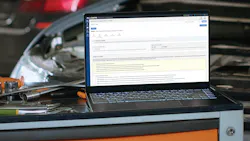
ALLDATA has launched a guided diagnostic solution to help technicians of all skill levels improve their troubleshooting abilities called Diagnostic Intelligence. The AutoZone-owned company said the software, available via an ALLDATA Repair or ALLDATA Collision subscription, combines OEM repair information, real-world repair intelligence, and AI-driven insights into one focused diagnostic workflow, which should enable techs to diagnose vehicle issues faster and more accurately, leading to fixing issues correctly the first time.
In short, the software upskills a user’s existing abilities.
“Due to vehicle complexity these days, the diagnostic time can vary widely depending on the issue, the technician's experience, and the path taken to diagnose the problem,” said Satwinder Mangat, president of ALLDATA. “A tool like ALLDATA’s Diagnostic Intelligence helps technicians get started with better guidance by providing probable causes, known fixes, recommended diagnostic steps, and common pitfalls to avoid.
How Diagnostic Intelligence works:
- Uses DTCs or symptom search to quickly isolate the issue
- Prioritizes probable causes and known fixes to guide next steps
- Organizes OEM diagnostic procedures at the code level, including testing and inspection workflows
- Offers shortcut diagnostic tests to identify the root cause faster
- Provides integrated access to Technical Service Bulletins (TSBs), wiring diagrams, and related service information
- AI-assisted insights to expand diagnostic coverage
After receiving a diagnostic trouble code or symptom, the tool provides access to prioritized, probable causes, OEM diagnostic procedures, shortcut tests, known fixes, and AI-assisted insights. These are all organized at the code level, with the goal of surfacing relevant information and removing guesswork. The tech also has easier access to technical service bulletins, wiring diagrams, and other supporting resources. Basically, it’s a magnet to find even deeply hidden needles in the diagnostic haystack.
Mangat noted that this points the tech on the correct diagnostic path sooner. We would describe it as taking that needle and now using it as a compass.
Mangat also added that by avoiding the wrong diagnostic path, the entire shop benefits.
“When a vehicle is fixed correctly the first time, the benefits compound: Shops reduce rework and comebacks, technicians spend less time retracing diagnostic steps, and customers get their vehicles back sooner with greater confidence in the repair,” he explained. “So, the real value comes from improving diagnostic accuracy and consistency.”
The need for diagnostic speed and consistency
Getting on that right path is more crucial as the vehicle systems are only becoming more complex and interconnected, leading to more potential root causes and possible pathways. At the same time, there may not be enough techs to address the issues. According to the 2026 TechForce Foundation Supply, Demand & Opportunity report, there will be a need for 1.2 million techs across 10 sectors, including automotive, collision, and diesel, between 2025 and 2029. TechForce estimated only 42% of that demand will be filled by vocational school graduates.
Auto has a supply/demand gap of 29%, while collision is 57%, and diesel 52%. These gaps are narrowing, TechForce noted, with school graduations up 7.6% year over year. But many of those graduates will still be early in their careers, learning the realities of the shop — let alone the intricacies of wiring diagrams and various OEM electrical systems.
And ALLDATA, like several other tool providers, has recognized AI can bridge the inexperience gap as well. For example, shop management platform Fleetio has added an AI Service Advisor that can reduce repair times by an average of 2.5 hours.
About the Author
 John Hitch
John Hitch
Editor-in-chief, Fleet Maintenance
John Hitch is the award-winning editor-in-chief of Fleet Maintenance, where his mission is to provide maintenance leaders and technicians with the the latest information on tools, strategies, and best practices to keep their fleets' commercial vehicles moving.
He is based out of Cleveland, Ohio, and has worked in the B2B journalism space for more than a decade. Hitch was previously senior editor for FleetOwner and before that was technology editor for IndustryWeek, and managing editor of New Equipment Digest.
Hitch graduated from Kent State University and was editor of the student magazine The Burr in 2009.
The former sonar technician served honorably aboard the fast-attack submarine USS Oklahoma City (SSN-723), where he participated in counter-drug ops, an under-ice expedition, and other missions he's not allowed to talk about for several more decades.