Why deferring repairs now will be costly in 2027
Key Highlights
- Deferring repairs into 2027 could increase costs as parts, labor, and shop rates rise.
- Winter breakdowns and limited shop capacity can turn routine maintenance into costly downtime.
- Fleets can use repair data and AI tools to prioritize maintenance, manage approvals, and control costs.
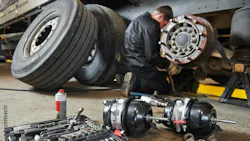
Every December, the same trade gets made in fleet offices. The brake job, the slow coolant leak, the check-engine light that’s been on since October: all of it gets pushed to January so the 2026 maintenance line looks a little cleaner.
Deferring a repair doesn’t make the cost go away. It moves it into 2027, where parts cost more, shop labor costs more, and shops are buried in winter work. The brake pads you skip today become pads and rotors in February, plus a tow, plus however many days the vehicle sits waiting for a bay. If there’s money left in this year’s budget, the cheapest place to spend it is on work you already know about.
The 2027 price increase is already on the books
The cost drivers for next year are already in place. Start with maintenance overall: The American Transportation Research Institute (ATRI) found repair and maintenance costs for trucking fleets rose 8.6% in 2025 to $0.22 per mile, reversing a small decline the year before and leaving them nearly 45% above 2019 levels. ATRI expects tire costs to stay elevated into 2027.
Parts are a big reason. Imported medium- and heavy-duty truck parts have carried a 25% Section 232 tariff since November 1, 2025; imported passenger-vehicle parts have carried one since May 2025; and duties on steel and aluminum now sit at 50%. According to benchmark data from Decisiv and the Technology & Maintenance Council (TMC), parts costs increased 3.7% year-over-year in Q4 2025, with certain VMRS categories seeing considerably steeper increases, including rear drive axles (20.6%), wheels, rims, hubs, and bearings (15.5%), and multi-piece filter kits (11.9%).
Labor is moving the same way. Fullbay’s annual State of Heavy-Duty Repair report found the median shop labor rate rose 7.4% in 2025, from $135 to $149 an hour, while median technician pay rose 10%. Those wage increases end up on your invoices.
Then there’s EPA 2027. The low-NOx standard for heavy-duty engines is on schedule for January, and fully compliant engines are expected to add $10,000 to $15,000 to the price of a new truck. EPA proposed changes in July that would soften parts of the rule, but none of them are final as of this writing. The predictable response is to keep current trucks longer, and fleets already are. ATRI found average truck age rose from 3.4 to 3.6 years in 2025, while annual miles per truck climbed about 4%. Older trucks cost more to keep running: Fleet Advantage estimates a Class 8 truck’s maintenance cost rises from 2 cents per mile in its first year to 16.5 cents in its sixth. If you’re stretching a replacement cycle to avoid 2027 pricing, every repair you defer on that truck compounds faster.
Winter turns deferrals into breakdowns
Cold weather adds failures on top of whatever backlog you carry into January. The Federal Highway Administration attributes more than one in five crashes to weather, and body shops fill up after the first big storm.
Timing makes it worse. Winter failures arrive in clusters. The first hard freeze takes out weak batteries across an entire yard overnight, and every fleet in the region calls the same shops that week. A vehicle you could have scheduled in November now waits behind collision work and other fleets’ emergencies, and you take whichever shop has an opening at whatever rate it quotes. The worst version is pulling vehicles for deferred work at the same moment others go down unexpectedly. That’s how routes go uncovered and deliveries get missed, and customers remember it.
Triage the backlog before Dec. 31st
Not every open item has to be done this year. Sort what’s open into four groups and work from the top.
- Safety items and open recalls go first. NHTSA’s recall lookup checks one VIN at a time, so for a large fleet, an OEM fleet portal or your fleet management company can usually run the full list faster. Recall parts can be backordered for weeks, so get in the queue now.
- Next come problems that get more expensive the longer they sit: brakes near minimum, tires near tread limits, weak batteries, coolant and oil leaks, aftertreatment warnings, and any fault code a driver has been living with. These are the repairs where a few hundred dollars now can turn into a few thousand in February.
- Third is work that depends on scarce shop capacity, such as calibrating advanced driver assistance systems (ADAS) and repairing EV high-voltage systems. Far fewer shops can recalibrate a windshield camera than can replace the windshield, and their winter calendars fill with collision work. Book that capacity before you need it.
- Cosmetic and convenience items can wait for January without much penalty.
Set approval rules before people leave for the holidays
A lot of year-end downtime has nothing to do with the repair itself. The vehicle is diagnosed, the estimate is written, and it sits because the person who approves it is out until January 4th. Fix the approval bottleneck before mid-December:
- Name who approves estimates during the holiday weeks, plus a backup with the same authority.
- Give shops a dollar threshold for routine work they can finish without calling. Three extra days off the road almost always costs more than the part waiting on a signature.
- Require shops to flag added work or parts orders immediately and to stay within approved amounts unless someone signs off.
- Ask for invoices within a set number of days after completion, so December work lands in the 2026 books instead of surprising you in the first quarter.
- For anything that won’t be finished by December 31, get a committed completion date in writing.
Negotiate 2027 terms before the rush
The time to talk about next year’s labor rates is before they take effect, while your vehicles aren’t on anyone’s lift. Ask your preferred shops whether rates or terms change on Jan. 1st and negotiate now. Bring data: average turnaround time, comebacks, and how often final invoices came in above the original estimate. A shop that knows you track those numbers prices and prioritizes your work differently.
If you can’t pull those numbers in an afternoon, that tells you something too. For many fleets, repair data is spread across shop portals, email threads, and spreadsheets, and building a year-end picture takes days of phone calls. Before you close the books, you should know how many vehicles are down, why, for how long, and what each open repair will cost. Fixing how you get those answers will save more in 2027 than any single rate concession.
Let AI handle the chasing
Most of what’s on this list is coordination: checking VINs, sorting fault codes, chasing estimates, getting approvals signed during the holiday weeks, and stitching a year of shop data together. It’s repetitive, follows rules you can write down, and is spread across more systems than one person can watch. That’s the kind of work AI tools handle well, and it maps directly onto the steps above.
- AI tools can read telematics fault codes, driver inspection reports, and open work orders together and rank the backlog by safety risk and the cost of waiting, so the brake job that’s about to become a rotor job doesn’t sit behind a cosmetic fix.
- Recall checks can run against every VIN in the fleet at once and repeat automatically as new campaigns post, instead of one lookup at a time.
- The holiday approval rules above work better when software enforces them. An AI agent can route each estimate to the right approver, approve routine work under your dollar threshold, escalate anything above it to the backup, and flag estimates that run past standard labor times or above what the same shop charged for the same job last quarter.
- Instead of a coordinator calling shops for status, agents can request updates, log promised completion dates, and alert you when one slips.
- The turnaround times, comeback rates, and estimate-versus-invoice gaps you need for rate talks can be pulled from invoices and shop messages automatically, so nobody has to rebuild them by hand in December.
Two cautions. AI can only work with the data it can reach, so if repair history lives in personal inboxes and paper files, getting it into one place comes first. And keep people in charge of the rules. You set the approval limits, preferred shops, and escalation paths; the software applies them every time, including the week between Christmas and New Year’s. Safety calls and major spending decisions should still reach a person.
If you’re evaluating tools, ask three questions. Does it work with the shops, fleet management company, and software you already use? Can you set and change the approval rules yourself? And does it act, sending the request and chasing the update, or does it only report what happened?
Don’t expect to roll out a new system before Dec. 31st. Work through this list by hand over the next few weeks, track how many hours the chasing takes, and use that number to scope what you automate for 2027.
Order ahead of the supply calendar
Chinese New Year falls on Feb. 6, 2027. Maersk’s freight guidance describes factory output slowing in the weeks before the holiday and workers returning gradually afterward. Add ocean transit time, and parts ordered from Chinese suppliers in mid-January may not reach U.S. shelves until spring. Ask your parts suppliers which of your high-turn items come through that pipeline and stock them now, along with anything already on backorder.
Do the same for parts winter predictably wears out: batteries, wiper blades, belts, hoses and, in snow country, tires. Every one of them will be harder to find in late January than it is today.
Every item on your open-repair list has a price today and a higher one after January 1. Pay the lower one.
About the Author
 Brett Carlson
Brett Carlson is CEO of ServiceUp, the agentic repair platform for modern fleets.