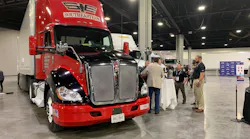
The North American Council for Freight Efficiency announced that six vehicles will operate in California, two in Canada, and five throughout the rest of the United States.
The study team interviewed more than 50 companies to learn about changes in lightweighting technologies, and to investigate the implications of lightweighting for commercial battery...
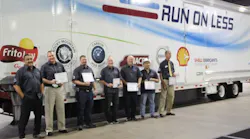
Participants in the North American Council for Freight Efficiency program hit an average 8.3 mpg during the three-week event, a significant improvement over the 6.0 mpg national...
The report found that the most efficient and effective idle-reduction solution for a fleet entails a combination of complementary technologies used together.
“We are looking for fleets operating a wide variety of regional haul applications and duty cycles but we are also committed to high MPG,” said Dave Schaller, NACFE’s Industry ...
Mike Roeth, executive director of the North American Council for Freight Efficiency (NACFE), and trucking lead for the Carbon War Room, discusses the purpose of NACFE.
The tractor-trailer industry’s fuel costs have been swiftly and steadily rising over the past decade. In 2013 diesel fuel costs reached $0.65 per mile, costing the industry more...
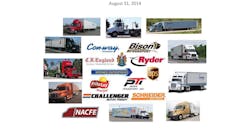
This report compares the results of a deep-dive investigation with 10 major North American fleets concerning their adoption of various products and practices for improving fuel...
Although it's more often technicians doing the tune-ups, they need as much attention as the vehicle assets themselves. To avoid tech burnout and increased downtime in your shop...
North American Council for Freight Efficiency released the 2018 Annual Fleet Fuel Study which investigates the fuel efficiency practices of 20 major fleets.
Fleet leaders from McAbee Trucking, Bimbo Bakeries USA, Office Depot, and PERC will discuss how propane-powered trucks are helping reduce emissions and operating costs during ...
NACFE's last Run on Less real-world study found diesel can reach 11.5 mpg, while a BEV sleeper from Windrose nearly hit 900 miles in one day. RNG and fuel cell trucks were also...
The non-profit has targeted idle time as a prime area to cut fuel costs and emissions, and its latest confidence report highlights the most efficient and cost-effective ways for...
Even though we cannot control the weather, there are a number of options you can choose from to keep your drivers comfortable and cool during the heat of the summer.
Fleets can improve their fuel efficiency with driver training, establishing preventative maintenance schedules, and by reducing engine idling and drag.
While NACFE has so far found that advancements in EVs has made smaller depots more ready for electrification, they're still collecting data on how larger companies are struggling...
Along with being used in fuel cells, hydrogen can also fuel internal combustion engines. And while not always being the most efficient, fleets may find they are the most proficient...
The North American Council for Freight Efficiency's latest report provides fleets with a data-based framework to help them navigate various powertrain options during trucking'...
Achieving a reduction in emissions and fossil fuel use in transportation may not be as simple as abandoning the diesel-powered ship as developments have proven significant improvements...
The evidence is piling up that a sustainable future relies upon many energy sources. No matter which path to decarbonization makes sense to your fleet, take it, because starting...
Advances in powertrain technologies along with federal and state mandates for lower emissions continues to drive the development of more than one fuel type for commercial vehicle...
The latest version of the NACFE Annual Fleet Fuel Study finds the technology adoption rate has grown to 41% and that average fuel economy among the 15 fleets the council is studying...
More and more safety technology has been added to commercial vehicles, and fleets must remember how to keep cameras and sensors working correctly before the first snow hits.
Preventive maintenance can have a very positive effect on vehicle uptime as well as fuel economy. Seasonal preventive maintenance may be another item to add to your maintenance...
Vehicle condition isn’t the only factor in asset performance, as driver habits play a major role in operational efficiencies. Here are some tips for keeping your driver pool in...
Reaching better fuel efficiency starts with respecting that improved maintenance practices on even minor moving parts in the engine can positively impact the greater system as...